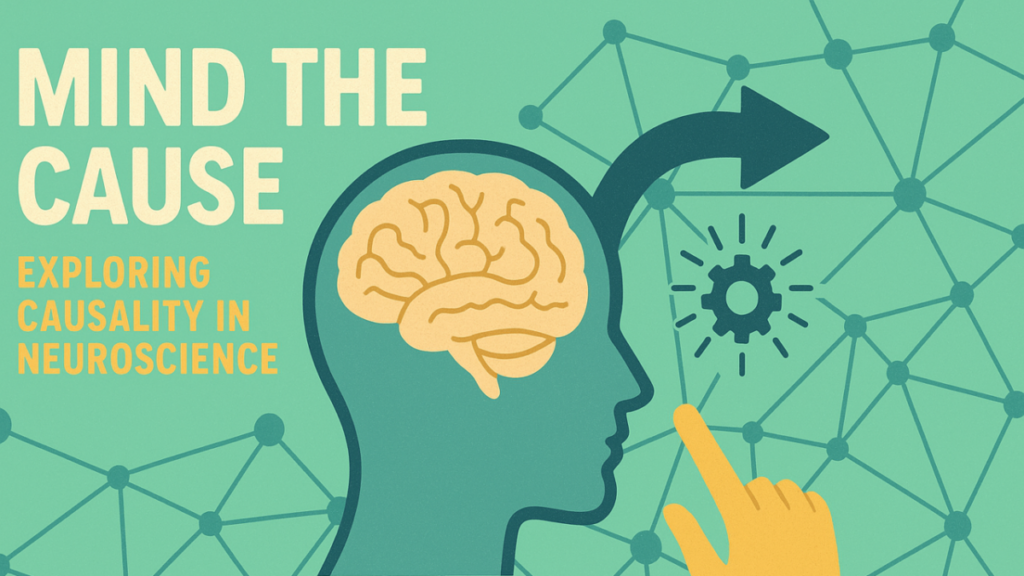
TN2 Symposium: Mind the cause – Exploring causality in neuroscience
| Date: | 28 May 2026 |
| Time: | 08:45 – 18:00 (CEST) |
| Location: | De Vrijzaal (ground floor, next to ‘Voetenplein’), Amsterdam UMC, location AMC |
| Registration: | Registration here to join the symposium |
Share this
TN2 stands for Translational Neuroscience Network, and we connect basic and clinical researchers in the field of Translational Neuroscience from all over the Netherlands and beyond. Join us on May 28 for a full-day in-person event exploring this year’s theme: “Mind the cause: Exploring causality in neuroscience”.
Program
| 08:45 Walk-in |
| 09:15 -09:25 Word of Welcome by TN2 organization |
| 09:25 – 09:45 Presentation by Susanne de Rooij – The role of early life factors in brain health: evidence from quasi-experimental studies |
| 09:45 -10:15 Presentation by Odile van den Heuvel & Sonja Rutten – Parkinson’s at the psychiatrist: the mutual enrichment of clinical care and research |
| 10:15 – 10:30 Panel discussion |
| 10:30 – 11:00 Break |
| 11:00 – 11:20 Presentation by Leon de Bruin – Topology, mechanism, and the limits of interventionism: rethinking causal explanation in neuroscience |
| 11:20 – 11:50 Keynote by Lauren Ross – Causation in Neuroscience: Explanation, Mechanism, and Control |
| 11:50 – 12:15 Panel discussion |
| 12:15 – 13:00 Lunch & Networking |
| 13:00 – 13:50 Early career lightning talks |
| 13:50 – 14:10 Presentation by Anouk den Braber – Genetic and Environmental Contributions to Alzheimer’s Disease: Insights from the PreclinAD Twin60++ Study |
| 14:10 – 14:30 Panel discussion |
| 14:30 – 15:00 Break |
| 15:00 – 15:20 Presentation by Jorge Meijas – Exploring causality across scales with computational models |
| 15:20 – 15:50 Keynote by Steven Sloan – Organoid-based approaches to investigate human neural development and function |
| 15:50 – 16:15 Panel discussion |
| 16:15 – 17:30 Drinks & Networking |
Keynote Speakers
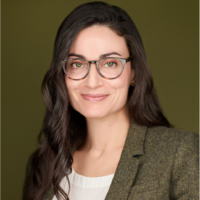
Lauren Ross
University of California
About
Lauren N. Ross is Dean’s Professor and Chancellor’s Fellow at the Logic and Philosophy of Science Department at the University of California, Irvine. Her research concerns explanation and causation in biology, neuroscience, and medicine. This work involves interrelated projects that address: the nature of explanation in these sciences, different causal structures and explanation types, and the rationale that guides particular forms of causal reasoning in these domains.
Causation in Neuroscience: Explanation, Mechanism, and Control
This talk examines current issues surrounding causation and causal explanation in neuroscience. While a significant amount of research in the field is focused on identifying the causal structure of the brain—at molecular, cellular, circuit, and network scales—various issues arise in specifying standards for this research. Many standards invoke the “mechanism” concept, although this term remains defined in various (sometimes incompatible) ways. This talk examines a way forward in clarifying standards for causal explanation in neuroscience. This work provides an analysis of principles that specify (1) when causes are (and are not) explanatory, and (2) when they offer better or more powerful explanations. Instead of focusing on whether a system should be called a “mechanism” or not, this talk suggests that it is more useful to specify when causes and causal systems explain.
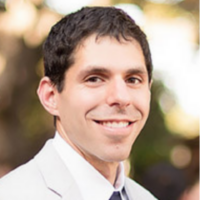
Steven Sloan
Emory University School of Medicine
About
Steven Sloan, MD, PhD, is an associate professor in the Department of Human Genetics at Emory University School of Medicine. Dr. Sloan is a member of the Cell and Molecular Biology Research Program at Winship Cancer Institute. Dr. Sloan’s laboratory team is interested in understanding human astrocyte development and what mechanisms underlie astrocyte maturation. They have a great interest in glioblastoma because it represents a pathological model of abnormal astrocyte development. They are attempting to find synthetic drivers of astrocyte maturation during development and believe that we could apply these approaches to glioblastomas as potential therapeutic interventions.
Organoid-based approaches to investigate human neural development and function
Understanding human neurodevelopment requires model systems that capture uniquely human features of neural lineage progression and circuit assembly. We use a combination of human organoid models and primary fetal tissue to define the timing, triggers, and trajectory of neural cell fate decisions in the developing human brain. We have particular interest in using in vitro models to understand both fundamental principles of neurobiology, as well as disease modeling of both rare and common neurodevelopmental disorders. We are also pursuing new avenues to introduce further sophistication to brain organoid models and to combine this in vitro platform with other modalities such as 3D bioprinting and microfluidics for the purpose of building tissues with even further fidelity to the in vivo setting.
Other Speakers

Susanne de Rooij
Amsterdam UMC
The role of early life factors in brain health: evidence from quasi-experimental studies
Brain development starts in utero and continues into early adulthood, with neurogenesis largely completed halfway through gestation and 95% of brain size achieved before school age. Environmental factors like stress or undernutrition during this critical period can influence development, potentially leading to beneficial adaptations or harmful long-term effects, particularly in the brain. Evidence for harmful long-term effects comes from quasi-experimental studies such as the Dutch famine birth cohort, where a relatively short period of acute undernutrition during prenatal development has been shown to be associated with brain health characteristics 70 years later.

Odile van den Heuvel & Sonja Rutten
Amsterdam UMC
Parkinson’s at the psychiatrist: the mutual enrichment of clinical care and research
During this session, Professor Odile van den Heuvel and Dr Sonja Rutten reflect on how their clinical work with people living with Parkinson’s disease and complex neuropsychiatric comorbidity has shaped and inspired their research. Drawing on their book Parkinson at the Psychiatrist: Stories of Love, Grief and Resilience, they share moving encounters with remarkable patients at the Outpatient Department of Neuropsychiatry of Amsterdam UMC. Through these narratives, the speakers explore how individual experiences raise new scientific questions and how their research has contributed to improvements of clinical care. The session highlights the dynamic cross-fertilisation between clinical care and research, illustrating how compassionate observation, interdisciplinary collaboration and patient stories can meaningfully guide innovation.

Leon de Bruin
Amsterdam UMC
Topology, mechanism, and the limits of interventionism: rethinking causal explanation in neuroscience
Topological models play a central role in contemporary neuroscience, particularly in large-scale network analysis. Measures such as modularity and hub structure are often treated as autonomous explanations of system-level organization. In this talk, I first argue that although topological explanations are not reducible to mechanisms, their explanatory relevance often depends on what we know about the neural processes that realize them. Second, I question interventionist accounts of causation (frequently invoked in both mechanistic and topological debates), which frame explanation in terms of contrasts between alternative variable values. However, many neural phenomena—such as oscillatory coordination or metastable transitions—are temporally unfolding processes that call for a more explicitly process-oriented conception of explanation.
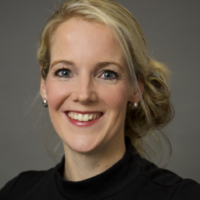
Anouk den Braber
Amsterdam UMC
Genetic and Environmental Contributions to Alzheimer’s Disease: Insights from the PreclinAD Twin60++ Study
Alzheimer’s disease (AD) is characterized by the gradual accumulation of amyloid and tau proteins, leading to brain atrophy and cognitive decline, with pathological changes occurring many years before clinical symptoms. Understanding which factors drive these early disease processes is crucial for improving early detection and prevention. Although the heritability of AD dementia is estimated at around 70%, the relative contributions of genetic and environmental factors to early AD pathology remain largely unknown. In the PreclinAD Twin60++ study, we have been following 100 cognitively unimpaired older monozygotic twin pairs for over 10 years, collecting biofluid, imaging, retinal, cognitive, medical, and behavioral data. This talk will highlight how twin studies can help disentangle genetic and environmental influences on early AD pathology and disease progression, and identify factors relevant for early detection and prevention.
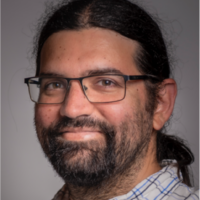
Jorge Meijas
University of Amsterdam
Exploring causality across scales with computational models
Elucidating the causal mechanisms of brain function is an extremely difficult task, especially since our brains are often the paradigmatical examples of noisy, stochastic and unreliable systems in nature. While experimental approaches ranging from in vitro cultures to in vivo optogenetics offer valuable help, computational modeling takes an alternative approach to the problem, as in this case we deal with a system (a ‘digital brain twin’) for which causality is known by design. In this talk, I will cover some examples from my lab’s recent research (from microcircuits involved in arousal regulation to global network abnormalities in brain disorders) to show how neurobiologically plausible computational models can help uncover hidden cause-effect relationships across multiple scales in the brain.
Contact
Questions regarding this TN2 symposium? Contact the Amsterdam Neuroscience team.